
In this guide, we show you how to integrate a HubSpot form with your Webflow site in 3 steps, using Webflow Apps. This method makes the process much simpler and puts the integration within reach even for beginners.
Your Webflow site becomes an effective marketing tool, connected directly to HubSpot.
The benefits of integrating HubSpot with Webflow
Integrating HubSpot with Webflow brings concrete benefits. Your contact forms are better managed, the design stays consistent between your marketing tools and your site, and the integration is quick. This combination strengthens your digital marketing strategy.
Before you start, check that you have an active account on both HubSpot and Webflow, and that you are logged in to both. Also prepare your form in HubSpot before you start the integration in Webflow.
A step-by-step guide to integrating HubSpot with Webflow
1. Install the HubSpot app in Webflow
Start by installing the HubSpot app in Webflow. This first step is quick and simple, and it lays the foundation for your integration. Then connect to HubSpot from the app.
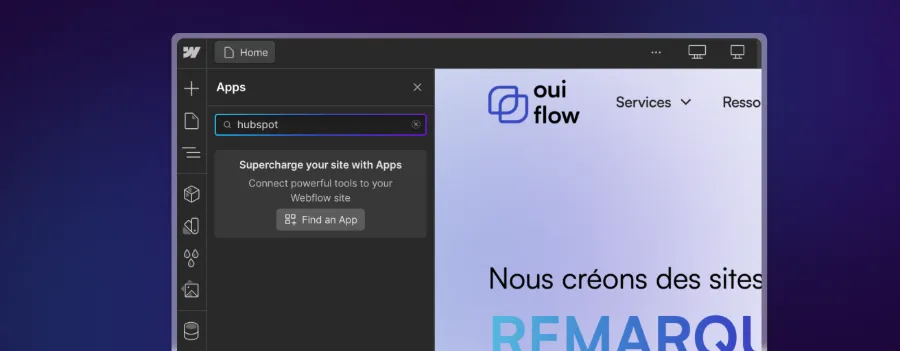
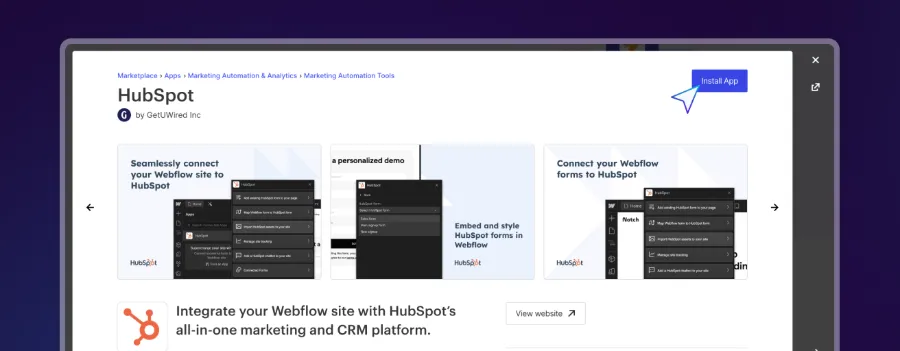
2. Activate HubSpot in the Webflow Designer
Once the app is connected, open the Webflow Designer and activate the HubSpot app. Click the Apps icon in the left panel to launch the app.
When you click "Launch", you get access to HubSpot's features. Choose the option that lets you embed a HubSpot form on your Webflow page.
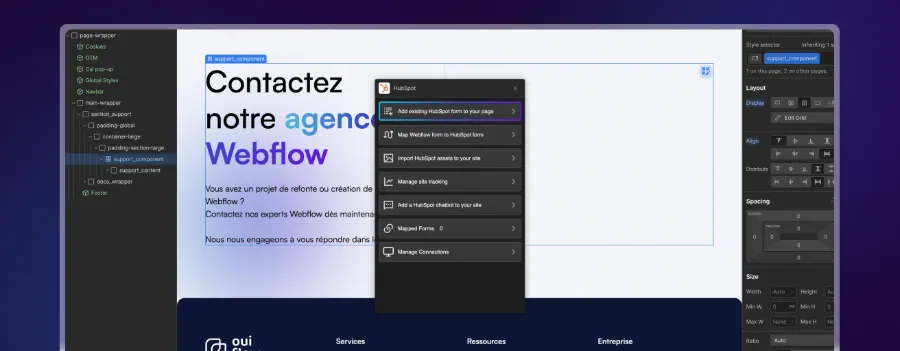
Then select the form of your choice to embed it on the page.
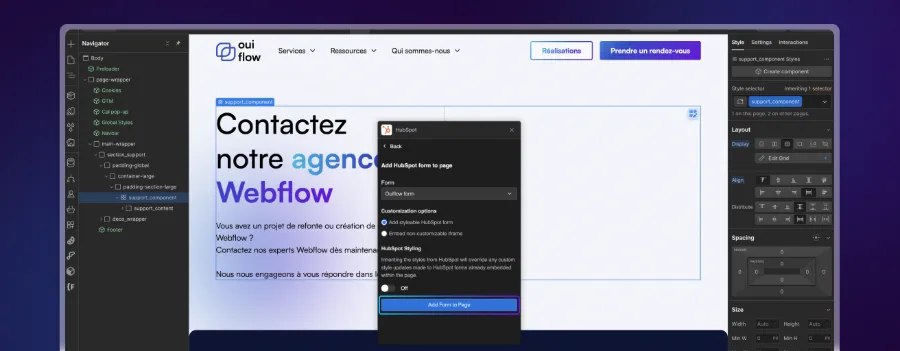
3. Customize your HubSpot form
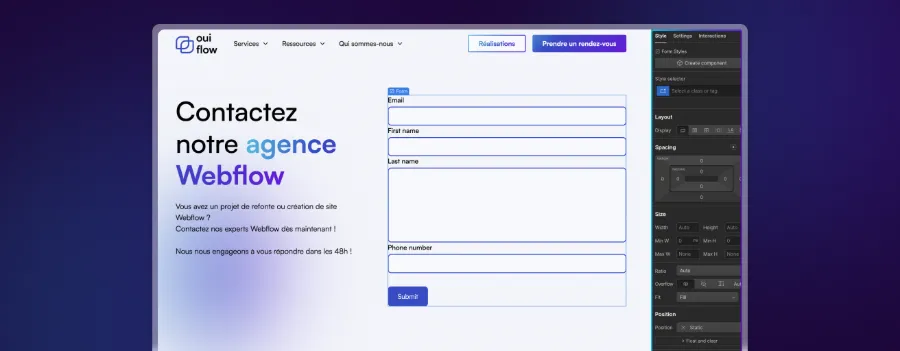
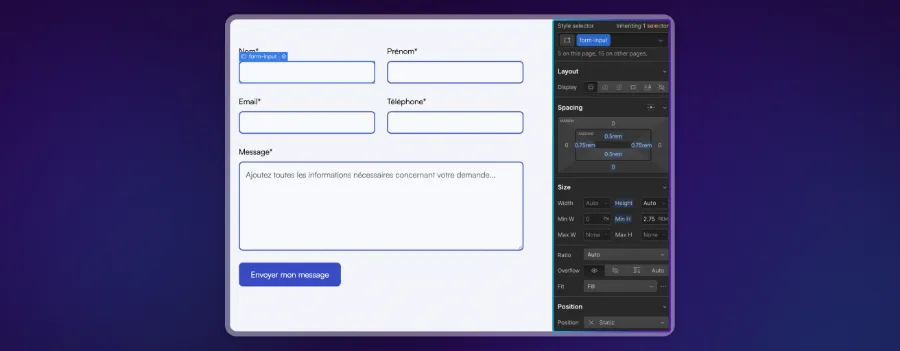
Once the form is embedded on your Webflow site, use Webflow's CSS options to customize it fully. The form then matches your site's design visually.
What are the strengths of integrating HubSpot with Webflow?
- Efficient lead and contact management. The integration simplifies lead management, because the information entered in Webflow forms syncs directly with the HubSpot CRM.
- Greater visibility. You track and analyze data from your website, social media and email campaigns, which makes your marketing actions more visible and more effective.
- Integration through Zapier is possible. Zapier offers automations between Webflow and HubSpot to build custom workflows and connect other apps.
- Lower costs. Connecting these 2 platforms reduces the need for separate tools and saves you time and money.
- Advanced tracking and analytics. The HubSpot tracking code embedded in Webflow lets you track visitor activity in detail, a useful basis for analyzing and improving your marketing performance.
In short
Integrating HubSpot with Webflow through Webflow Apps opens up new possibilities for marketing teams and web designers.
Follow this guide to make the most of these 2 platforms and improve both your marketing strategy and your site's user experience.