
An effective landing page turns visitors into loyal customers. Strategic design and targeted content make all the difference. Here are 10 simple tips to optimize your landing pages and maximize conversions on your Webflow site.
1. Minimize outbound links
On a landing page, doing less often gets you more. Cutting outbound links is like inviting someone into your home and showing them straight to the living room, with no detours. This simple tip has a clear effect on conversion.
How the web giants apply this rule
- Apple takes great care with the focus of its landing pages. When the brand presents a product, everything else disappears and the page shows only that product. Visitors wear blinders, in the best sense of the word.
- Dropbox gently but surely draws visitors toward its sign-up form. To get there, the page is stripped of every distracting link, and conversions follow.
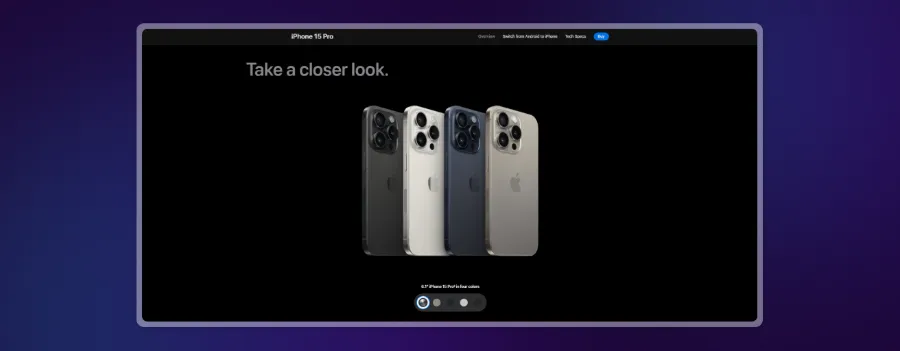
Key ideas to keep in mind for minimizing outbound links
- Reduce distractions on the landing page. A clear, clean page keeps your visitors' attention on your message.
- Maximize user attention. When your page is built around a single goal, it leaves room only for your message and the action you expect. Like a film director, you build every scene to lead to the climax, the conversion.
By cleaning up your pages the way these big brands do, you can expect your conversion rates to rise noticeably.
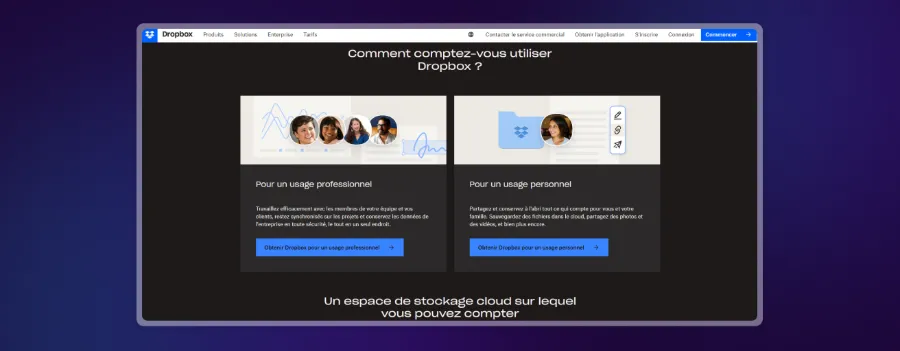
2. Position your conversion zone strategically
The conversion zone is the centerpiece of your landing page. Its location matters as much as the spot of a booth at a fair. In the wrong place, it goes unnoticed. In the right place, it draws every eye.
The power of good placement
Where you put your conversion form on the page has a strong impact. Too high, and it can slip past people who want to learn more first. Too low, and impatient visitors may never find it. Place it where it has the best chance of being seen and used.
Key ideas to keep in mind for positioning the conversion zone strategically
- Place your forms methodically. Guide your visitors step by step through your content until they reach the "conversion" square. A well-placed form turns a simple visit into concrete action.
- Optimize the conversion zone. Make it impossible to ignore. It should be the high point of the page, the moment visitors are waiting for to take action.
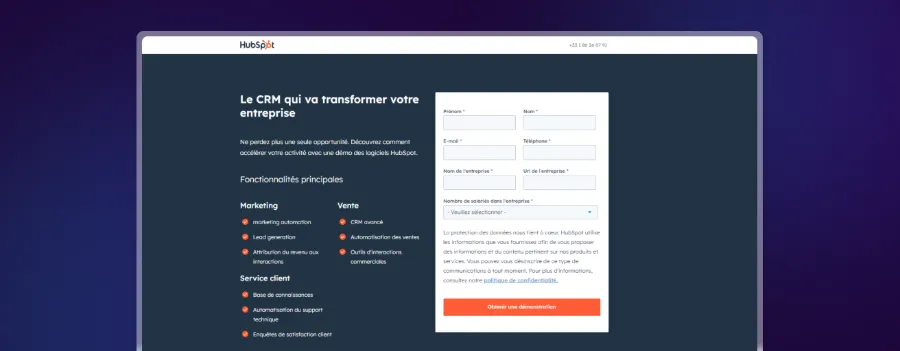
By placing your form or your call to action (or call to benefit) strategically, you create a journey that leads naturally to action. Like a tour guide, you walk visitors through your page all the way to your offer.
3. Simplify your forms to convert more
A form as long as a grocery list scares your visitors off. Nobody wants to fill out an administrative file just to say hello. Lighten the load and your conversions will show it.
The transformation of a form
Take the example of Airbnb. In its early days, the platform had a fairly complex booking and sign-up process. After analyzing user behavior, the team shortened the sign-up form and made it more intuitive. This simplification led to a significant increase in sign-ups and bookings. Once the hurdles were cleared from the track, users ran straight to the finish line, the booking.
Key ideas to keep in mind for simplifying your forms
- Make your forms user-friendly. Greet your visitors with a short, warm form. It puts them at ease and encourages them to engage.
- Test multi-step forms. Visitors move forward in small, easy steps. Many tools let you build multi-step forms natively in Webflow. Formly is one of them, and we encourage you to check it out.
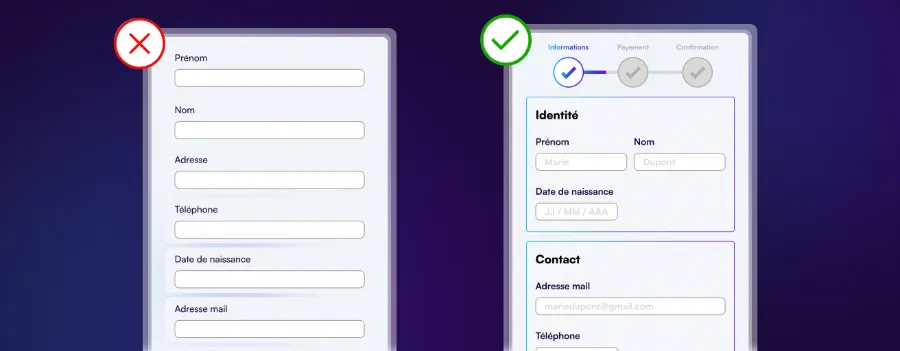
Simplifying your forms means throwing the door wide open. Visitors come in more easily, and once inside, they are much more willing to enjoy what you offer.
4. Highlight clear benefits
To capture your visitors, rely on catchy headlines and crystal-clear lists. Like a lighthouse guiding ships, they direct the eye and your visitors cannot miss them.
The art of catchy headlines and effective lists
Your headlines are the handshake on a first date. They need to be firm and warm and make an excellent first impression. Your lists are like the menu at your favorite restaurant, where every line is a promise.
Key ideas to keep in mind for highlighting clear benefits
- Present your benefits clearly. Bring out the strengths of your products or services so your visitors discover them effortlessly.
- Use bullet lists. They pave a direct path to understanding and engagement. Each bullet is a step that brings visitors closer to action.
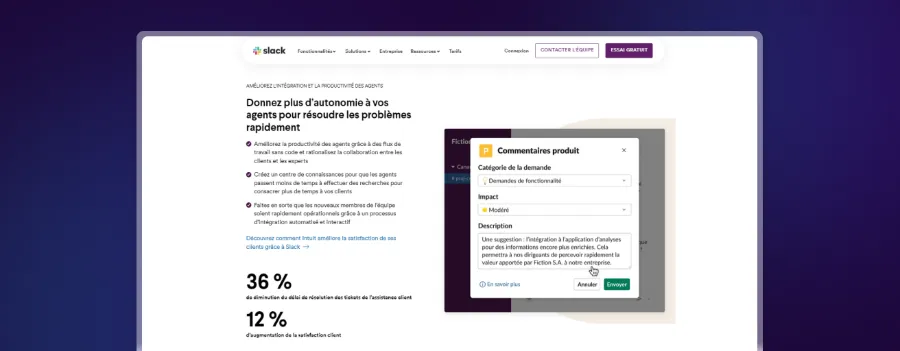
Punchy headlines and readable lists guide your visitors all the way to conversion. You hand them a treasure map where the X marks the spot of your offers.
5. Use customer testimonials, the voice of trust
Testimonials from satisfied customers clearly strengthen the credibility of your offer. They act like a crowd of fans telling everyone how much they like your product or service. Nothing convinces better than a customer saying "it worked for me".
The power of testimonials, by the numbers
According to one study, about 72% of consumers say positive testimonials and online reviews increase their trust in a business. In addition, 70% of people say they are more likely to buy a product after reading a positive testimonial. The effect is similar to a trusted friend recommending something to you.
Key ideas to keep in mind for using customer testimonials
- Rely on social proof. Customer testimonials are its purest form. They show that real people tried what you offer and loved it. It is word of mouth for the digital world.
- Connect testimonials and conversion. A good testimonial pulls in conversions like a magnet. Someone else does the convincing for you by sharing their positive experience with your product or service.
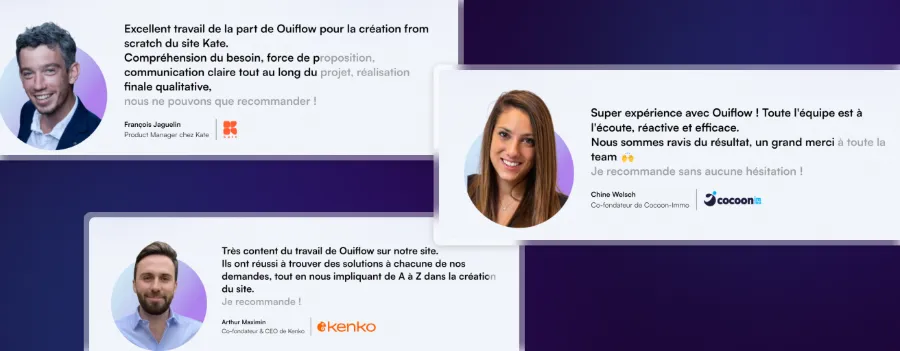
By adding authentic, positive testimonials, you give your visitors the confidence they need to take the plunge. Your customers become your supporters and convince visitors that joining the club is the right decision.
6. Use multiple calls to action, a symphony of clicks
Think of your web page as a stage where each call to action (CTA) plays its own melody. In this orchestra, each instrument has its own charm and its own way of engaging the audience. A good mix creates a catchy tune that makes people want to act.
The different rhythms of CTAs
- The classic CTA says "Buy now" or "Sign up here". These are your violins, reliable and traditional, perfect for an audience ready to commit.
- The creative CTA offers "Join the adventure" or "Discover our secret". Original and captivating, it intrigues and attracts people looking for something new.
- The urgent CTA announces "Limited offer" or "Act fast". Like drums, it creates a sense of urgency that prompts action right away.
- The call to benefit promises "Save time" or "Improve your life". These CTAs are your acoustic guitars. They strike a chord by highlighting what the user gains directly, which creates a strong emotional connection.
Key ideas to keep in mind for CTAs
- Vary your calls to action. Offering several types of CTA is like scheduling several musical genres in the same concert. You keep interest high and meet the different expectations of your audience.
- Increase your click-through rates. Each type of CTA speaks to a different segment of your audience. Like a conductor who knows when to bring in each instrument, you raise your click-through rates.
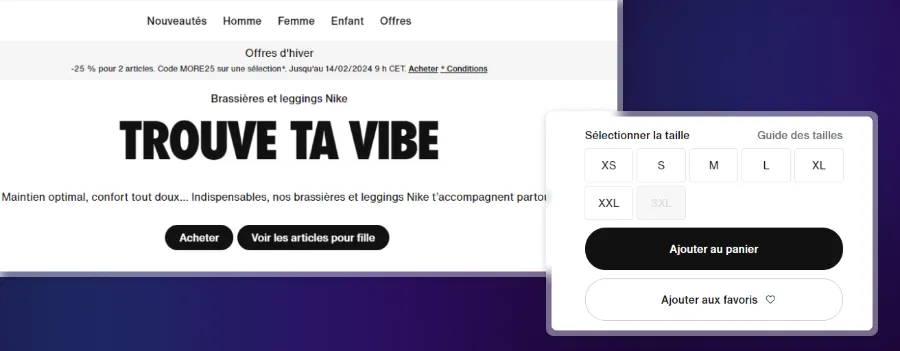
With varied calls to action, you compose a harmonious, engaging user experience. You invite your visitors to a dance where every step brings them closer to conversion.
7. Focus on a single goal, the strength of a targeted message
On the web, trying to please everyone is like running in every direction at once. You get nowhere. Set a single, clear goal, then shine the spotlight on the action you expect from your visitors.
The effectiveness of a targeted approach, a real case
Take Spotify. Originally, its homepage presented a multitude of features and options. The team realized that too many choices could overwhelm new users. Spotify therefore focused on a single clear message, "Listen to music for free". This targeted approach considerably increased the sign-up rate, because it led users straight to their main goal, discovering and listening to music.
Key ideas to keep in mind for a targeted approach
- Give your landing page a single goal. It works as a compass for your visitors. You guide them directly to the action you want, with no detours or confusion.
- Target your message. A targeted message cuts through the fog of information like a laser beam. It hits what really interests your visitors and increases the chances of engagement and conversion.
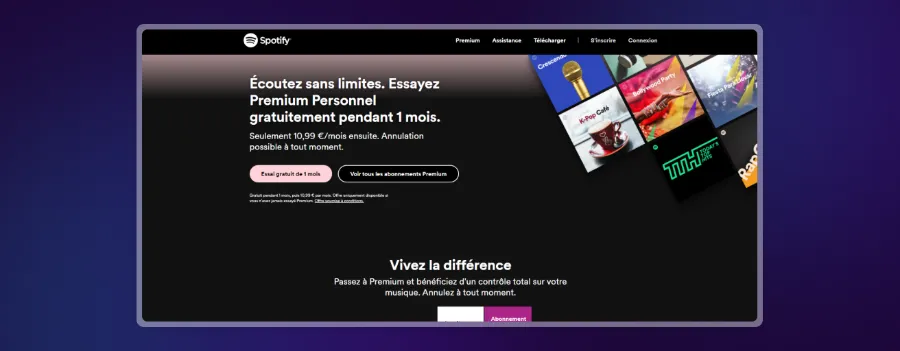
A single goal makes the user experience crystal clear and effective. You simply tell your visitors what you have to offer them and why it is good for them.
8. Optimize for mobile and ride the wave
Not optimizing your site for mobile today is like opening an ice cream shop in the middle of winter. You miss the chance to be there when your visitors need you most. With the explosion of smartphone use, a mobile-friendly site is a wide front door open to all your visitors. It is now a requirement.
The mobile era in a few key figures
More than half of global web traffic now comes from mobile devices. According to Google, 61% of users do not return to a mobile site if they had trouble navigating it, and 40% turn to a competitor. A site poorly optimized for mobile therefore lets a good share of your potential customers slip away.
Key ideas to keep in mind for optimizing for mobile
- Adopt a responsive design. It adapts to every screen size and offers a smooth experience, whether your visitors are on a smartphone, a tablet or a computer.
- Take care of the mobile user experience. As in an amusement park, every element must be accessible, attractive and easy to use so visitors want to stay and come back.
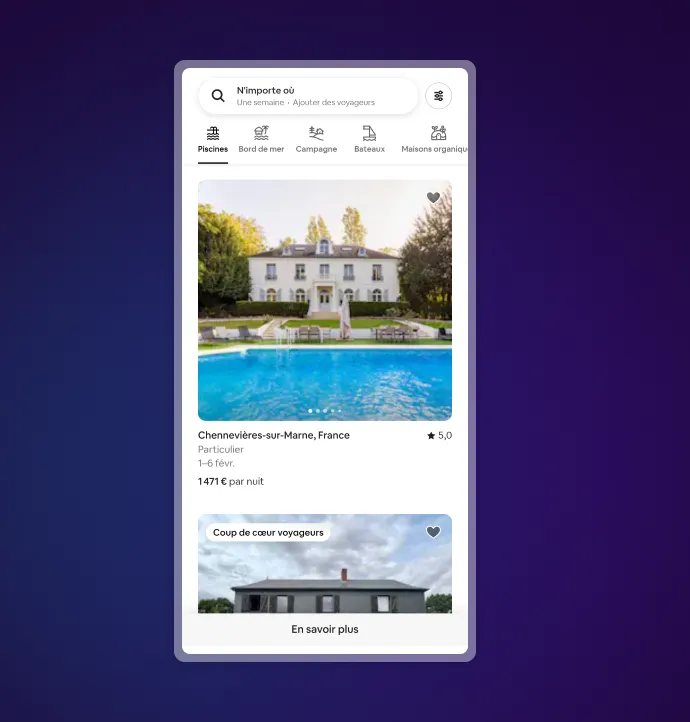
By investing in mobile optimization, your site is ready to welcome the growing wave of mobile users. You fit your store with a wide automatic door, and everyone gets in easily.
9. Fast loading performance, speed that drives engagement
A site that loads in a flash is like a hot coffee served to a customer in a hurry. They leave satisfied and come back. A slow site is like a waiter who drags his feet. Customers get impatient and end up going elsewhere.
Speed matters, its impact on users
A one-second delay in loading time can lead to a 7% drop in conversions. In addition, 53% of mobile site visitors abandon a page if it takes more than 3 seconds to load. More than half your guests leave the party before the music even starts.
Key ideas to keep in mind for fast loading performance
- Optimize loading speed. It is like putting a racing engine in your car. Your visitors get where they want to go quickly and without hassle. A fast site improves the user experience and keeps your visitors engaged longer.
- Measure the impact on visitor retention. Your site's speed directly affects how many visitors stay or leave. Fast loading keeps them on the page and increases the chances of conversion.
By taking care of loading speed, you show your visitors that you respect their time and you increase your chances of keeping them. You open a traffic-free highway to conversion.
10. Test before going live, the art of fine-tuning
Launching a site without testing it is like skydiving without checking that your parachute is attached. A/B tests are your safety net. Like tasting the sauce before serving the dish, they make sure everything is ready for your guests.
The power of A/B testing, an eye-opening case study
Amazon uses A/B testing in an exemplary way. The company constantly tests different elements of its site, from product descriptions to images and buy buttons. For example, it found that changing the color and size of the "Add to cart" button could significantly increase conversions. Even the smallest details deserve testing, because they can have a strong impact on the user experience and conversions.
Webflow and the staging domain, a winning duo
With Webflow, testing your site before launch is simple. The staging domain (the test version of your site) is your lab. You try all your ideas there without disrupting the live site, like in a training room away from prying eyes.
Key ideas to keep in mind for testing before going live
- Run A/B tests. They show you what works and what does not, so you can refine your site continuously.
- Check everything before launch. It is the dress rehearsal before the show. Everything is in order for the big day and you avoid unpleasant surprises.
Testing your site before launching it puts every chance on your side. You fine-tune your recipe until it is just right.
Conclusion
These 10 steps prepare your pages to capture your visitors' attention and turn them into loyal customers. From cutting outbound links to A/B testing before going live, each one contributes to a smooth, convincing user experience.
Optimizing your pages is an ongoing process. Listen to your users, follow trends and do not be afraid to experiment. Your site invites your visitors to walk part of the way with your brand. Make that journey memorable and your conversion efforts will pay off.
A well-optimized page reflects your understanding of your visitors' needs. It shows that you listen to them and offer exactly what they are looking for.