
You have just built your website and you are wondering how to protect it against threats. Here are our 5 tips to protect your Webflow site and sleep soundly.
1. Back up your website data regularly
Before learning to defend yourself, you have to accept that no fortress is impregnable. Your website is no exception. The first thing to do is to set up regular backups of your site to avoid any data loss. You can do it manually, but Webflow can also do it automatically. You no longer have to think about it, and you can work with peace of mind.
2. The HTTPS protocol and the SSL certificate
HTTPS protocol, SSL certificate… Lots of technical terms for something everyone knows without realizing it. The little padlock shown at the top of almost every web page is the foundation of online protection. It secures the data of your site's users and, as a result, gives them a sense of security.
How does it work?
It works quite simply. The SSL certificate creates a private communication channel between your website and other sites and servers on the internet. Hackers then have a much harder time stealing your customers' sensitive data. That is not all. In August 2014, Google announced that having a site protected by the HTTPS protocol counted toward your site's ranking in its results. So you have every reason to switch to HTTPS quickly, for your customers and for yourself.
3. Protect your customers' payments
Online transactions are a huge market. Hackers mainly target personal data, both yours and your customers', and bank details in particular. If you run an e-commerce site and want to strengthen its defenses, do not wait. There are very simple solutions to protect your business and your customers effectively.
- Multi-factor authentication.
Simple and elegant, multi-factor authentication checks your customers' identity and limits data theft. It adds a 2nd line of defense behind the password. A verification code is sent to your customer by email or text message, and they enter it to confirm their identity.
- 3D Secure authentication.
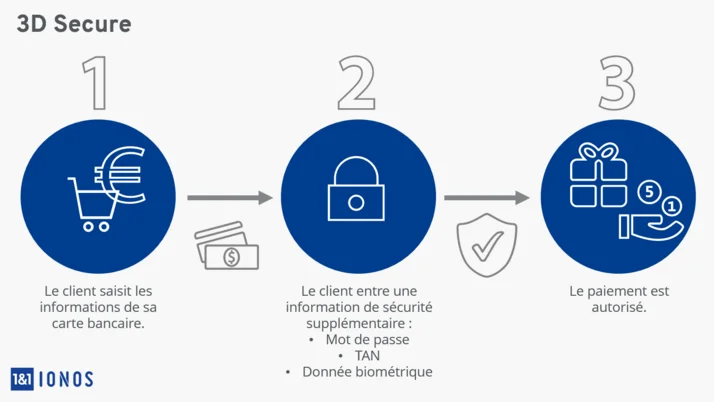
On the same principle, 3D Secure authentication adds a solid barrier by linking your customer's bank directly to your website. The customer must enter a one-time code sent by their bank or confirm their identity in their banking app to validate the transaction.
These steps can feel long and restrictive in the moment. Yet they give customers confidence, which is an excellent way to bring them back.
The technical side and Webflow
Here are some slightly more technical defense strategies. They are not necessarily harder to implement, but they are less known to the general public. They significantly strengthen your website's security. All the solutions suggested are built into Webflow. The Ouiflow team can also handle them for you, so you can stay 100% focused on your projects.
4. SQL injection attacks
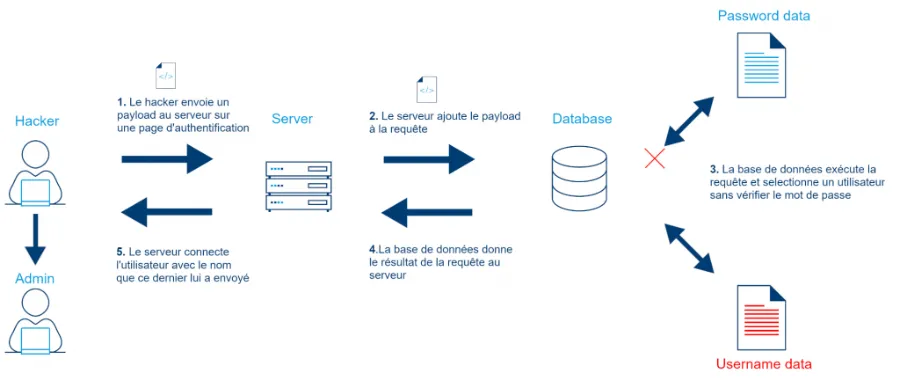
The SQLi vulnerability, better known as SQL injection, is a technique hackers use to attack your site. It is formidable. It lets them retrieve all your customers' data by tricking your server with fake SQL queries. If the site is not properly protected, it answers these queries and hands over everything the hackers are looking for. This hacking method is very effective. In 2013, nearly 1 billion Yahoo accounts were hacked this way. Protecting yourself against it is a must.
How do you protect yourself?
There are several effective methods. The first is to have Ouiflow build your site. By using Webflow, we greatly reduce the risk of data theft. To do this, we rely on an AWS shield that blocks attacks and lets you carry on with your business calmly.
If you want to block these attacks yourself, other solutions exist. For example, you can use an IDS or an IPS, 2 intrusion prevention systems that detect attacks and alert you.
Another precaution you cannot skip is to always keep your system up to date. Once patch notes are published, older software versions become vulnerable, because their flaws are made public too. Updating your system regularly is an effective way to protect yourself.
5. Choose a certified provider
The ISO 27018 standard defines a set of measures a web host must apply to secure the data it hosts. Certification is only granted if the host complies with this standard, which applies internationally. It is therefore a guarantee of safety, and it is only issued by the IAF (the international organization that grants accreditations). It is a reliable way to check that the host you choose has the defenses in force worldwide.
By choosing Webflow to build your website, you automatically meet these protection standards. Combined with the other protections included in the Webflow offer, these standards give your site a very good level of security.
Conclusion
You now have the keys to secure your website. By applying these tips, you can build and run your site safely. There are of course other tips to take your defenses further. Our team will be happy to share them if you would like to get in touch with us.
Now it is your turn.