
At Webflow Conf 2024, Webflow presented several new features and improvements. They serve 2 goals, improving the user experience and expanding what you can design without code. Key announcements included better team collaboration tools and deeper integrations with other platforms. Webflow also put the emphasis on site accessibility and performance, with tools that make web best practices easier to follow.
We reviewed these announcements to give you a summary.
Improvements to existing features
Let's start with the improvements to what already exists. They help you build sites that perform better and are easier to scale. Here are the main updates.
The ability to edit styles per locale
Since last year, you can translate a Webflow site natively. One point was still blocking. You could not adapt the design from one language to another. This is now fixed, since you can edit the style of each locale. It was a long-awaited feature. To go further, read our complete guide to Webflow Localization.
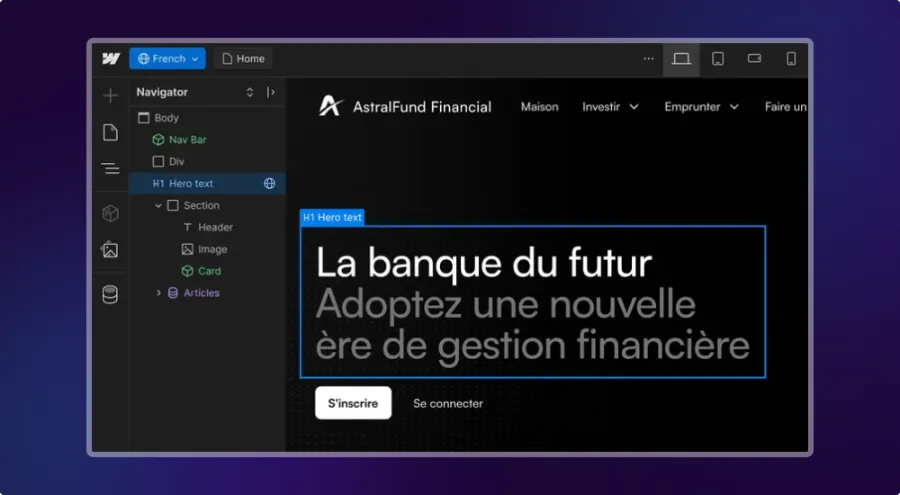
Webflow also listened to its community and raised the number of available languages. You can now add 10, compared with 5 before. The only downside is that this option is only available on the "Localization Advanced" plan, at $35 per locale per month. We regret that it is not included in the more affordable "Essential" plan ($12 per locale per month).
More powerful design systems with Component Style Variants
The design system strengthens visual development for every team. After last month's updates to variable management, Webflow announced component style variants. They let you define several style options for the same component. You manage fewer components, with more flexibility.
More flexibility and power for the CMS
The CMS API now supports bulk operations. You can bring data from third-party tools into Webflow more efficiently, even at scale. The time saved is considerable and pushes Webflow's limits further.
Simpler form management
Forms play a central role on a website. They collect leads and user feedback, build mailing lists and much more. Honestly, we felt Webflow was not doing much to improve them. With lots of spam and an interface that was not very intuitive, it was time for a change.
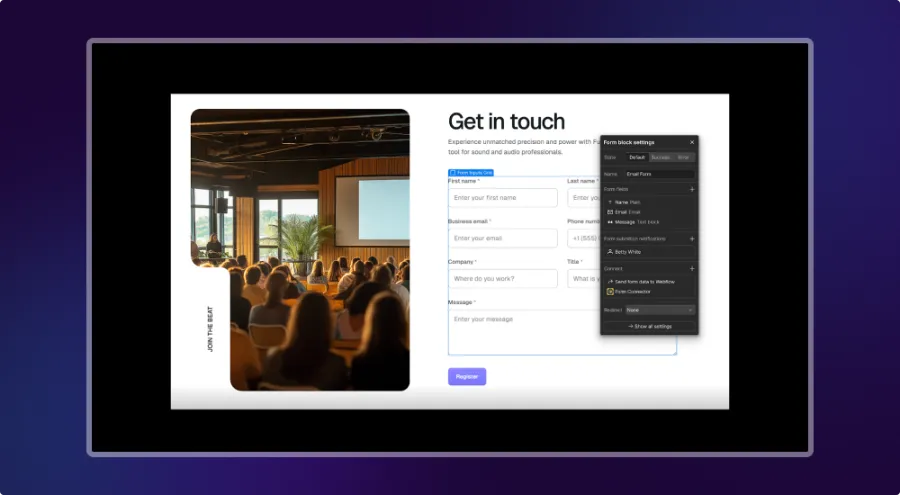
The new bot protection works in the background. It blocks unwanted submissions while protecting data privacy. The way form settings are displayed in the Designer has also been redesigned, to centralize connections and submission notifications. The goal is to simplify the work between the Designer and the dashboard, and we really like this change.
Enabling better collaboration between teams
Webflow presented new features to make teamwork easier.
"Page building" available to everyone
Long reserved for "Enterprise" customers, page branching is now open to all customers. This is excellent news that will make workflows smoother.
Page building lets marketers, clients and less technical colleagues quickly create pages in Webflow with drag and drop. They use blocks approved by the designers. Designers stay in control of the design system, and marketers independently create on-brand pages. No more fear of a wrong move, you just assign the right role to each person.
New navigation in Webflow for better productivity
This tab-based navigation lets you switch easily between the Designer, the CMS, the Analyze and Optimize tools, and Preview mode. You also see in real time who is working on the same page as you. You can add comments, or publish your site while collaborating with your team.
Design approvals
The design approval process ensures that proposed changes to the site are reviewed and approved by the people in charge of design. One small regret is that this feature will be reserved for "Enterprise" customers. If you are on a standard plan, you will have to wait a bit longer.

Analyze and Optimize, 2 new products launched by Webflow
Webflow now presents itself as the "first website experience platform". Its new features go beyond simply building sites. This approach sees the web experience as a continuous cycle of building, managing and optimizing. In that spirit, Webflow is launching "Webflow Analyze" and "Webflow Optimize". These 2 new products give you full control over your site's experience and performance.
Native website analytics with Webflow Analyze
Webflow is launching "Webflow Analyze", a native analytics solution. It offers a unified view of visitor behavior, so you can make data-driven decisions and improve site performance. Designers, content creators and developers track performance by site, by page and by click, directly in Webflow. Setup takes 1 click and event tracking is automatic. Webflow Analyze also respects privacy and integrates with consent management solutions, so you stay GDPR compliant.
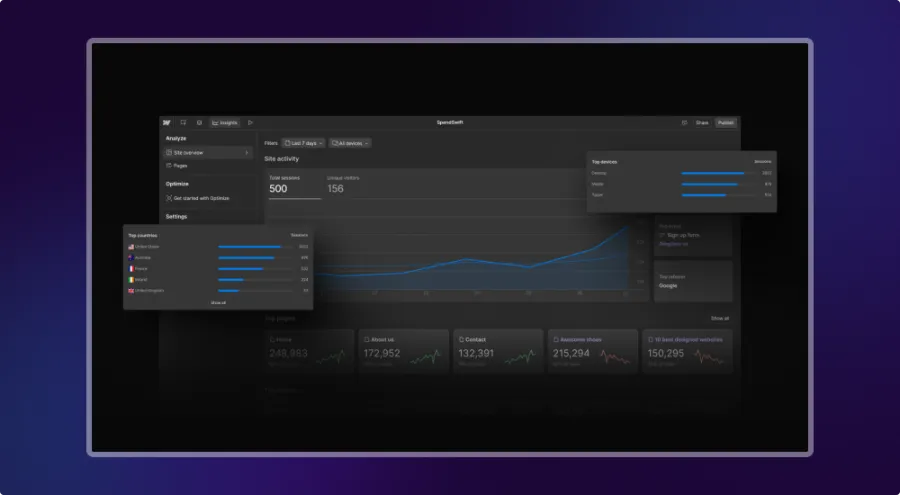
This native analytics solution is open to everyone, and pricing starts at $39 per month.
Native A/B testing with Webflow Optimize
Webflow is also launching "Webflow Optimize", an A/B testing solution. It opens the way to more personalization and account-based marketing (ABM). The solution relies on an artificial intelligence layer. It aims to maximize return on investment by running several tests in parallel, analyzing user behavior and personalizing the experience for each visitor. The "AI Optimize" feature automatically adjusts experiences based on how visitors react in real time.
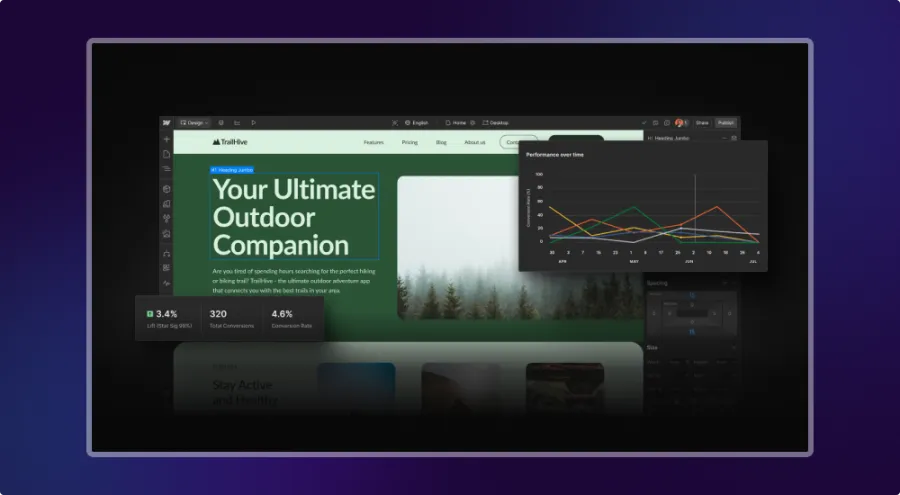
You will need to plan the budget, though, since this feature will be available from $299 per month.
The launch of a built-in AI assistant
Webflow announced a new AI assistant with 2 main features.
AI-powered design
Webflow AI Assistant speeds up design by generating new page sections from an existing design system. It makes common sections easier to create, such as pricing, features or testimonials. Once the preview is generated, you can customize the section so it fits your site perfectly. The assistant helps you launch new campaigns faster, while you keep full control over the published content. Available in limited beta, this feature will probably become paid eventually.
AI-powered writing
The AI assistant will help marketing teams quickly create relevant content in Webflow. It relies on bulk generation of sample CMS items. It can produce a complete CMS item, adapted to the context and the brand's tone from the first draft. For content teams and designers, this tool speeds up content creation and frees up time for more strategic work.
With this launch, Webflow reaffirms its commitment to data privacy, since the data belongs to users. Webflow states that the generative models launched today do not use user data. If this policy changes, Webflow promises to communicate it clearly. Users will then have to give explicit consent to take part, with no automatic enrollment.

The acquisition of GSAP
Webflow announced the acquisition of GreenSock, the company that develops GSAP. This powerful and robust JavaScript animation library can animate almost anything. Webflow wants to make advanced development capabilities accessible to everyone, to create interactive and engaging web experiences.
We will follow what comes next closely, since we now use GSAP on almost all of our sites.

Continuing to grow the Webflow community
Webflow made several announcements to support the growth of its community.
New Webflow Practitioner certification
Webflow announced interesting updates to Webflow University. They include the beta launch of the Webflow Practitioner certification and the opening of a dedicated help center. This center gives quick access to answers through Webflow's documentation.
Updates for template creators
Webflow is updating its template marketplace. Creators get new data to better understand demand and current trends. Webflow is also relaxing the exclusivity rule for templates, which can now be distributed on other marketplaces.
The redesign of the Webflow Certified Partner program
In place since this summer and presented again at Webflow Conf, the certified partner program has been completely redesigned. It better reflects the partners' level of expertise.
We are very proud to be part of the very exclusive circle of Webflow Premium Partners.
Webflow also announced the return of "Client Billing", renamed "Client Payment". This feature lets you request your clients' payment details, to cover hosting costs and other extras while the site is built and hosted in your workspace. Eventually, it will let you charge recurring project fees for your services. Transfers without interruption are coming too. You will be able to move a site to a client's workspace without disrupting its subscription. These features will open to all users on agency and freelancer Workspace plans later this year. Project fees are planned for early next year.

Webflow Conf 2024, our takeaways
Webflow Conf 2024 unveiled important new features to make sites more interactive and more efficient, with better management tools and deeper integration with other platforms. Webflow Analyze and Webflow Optimize mark a clear step forward, with in-depth analysis and optimization of site performance. The focus on collaboration, accessibility and continuous improvement shows Webflow's intention to offer a powerful and accessible tool.
As a Webflow agency, we look forward to testing these new features.